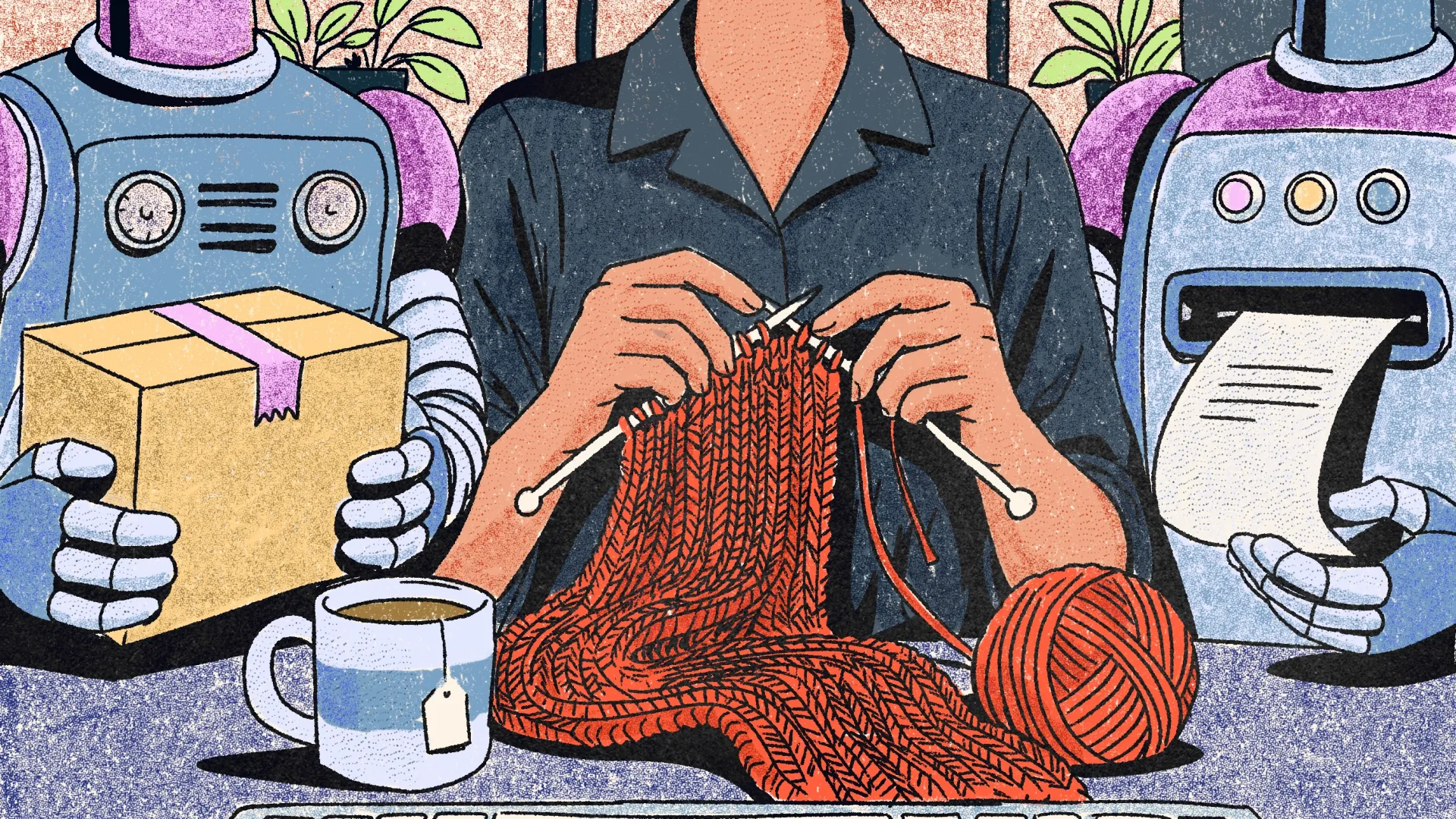
At a market stall, you soon learn what makes someone stop. They pick up a scarf, turn it over to look at the knit and ask whether you make it in another colour. By the time they get to the price, they’ve felt the yarn and met the person who chose it. Online, that same scarf might get a thumbnail, a price and a second of someone’s attention. How do you give them enough of the market-stall experience to want a closer look?
What Etsy’s new AI rules mean for makers
On 22 October 2026, Etsy announced tighter rules on how sellers use AI. For most physical products, a listing now needs at least one unedited photograph of the actual item against a real background. For anyone selling knitting or crochet patterns, the instructions must be the seller’s own work and the listing must show a real piece made from them. Etsy says it plans to begin proactively enforcing the photo requirements in early 2027.
There’s still room for AI in Etsy’s marketplace. Artists can sell work they’ve used AI to create from their own prompts, provided they disclose that use in the listing description. For a buyer, the distinction matters. Someone choosing a print might love the result and be curious about the tools. Someone buying a knitting pattern is about to spend money on wool and several evenings following those instructions. They want to see the jumper. That last point is worth taking into your own shop, wherever you sell. If customers care how something was made, give them a proper look.
When customers start asking for your website
Etsy can introduce you to someone who has never heard of you. A shop of your own starts to earn its keep when people are already looking for you. Perhaps customers ask at markets where they can buy another piece. Perhaps you have a following who turn up whenever you release a new collection. Where would you like to send them?
With Shopify, you choose what greets them. A textile maker could open a collection with a close-up of the weave, show the same piece worn so buyers can judge its scale, then explain why that particular yarn holds its shape. If you make to order, you can put the lead time beside the size selector, right where someone is deciding whether it will arrive in time for a birthday. These are the conversations you already have across a stall. Your shop can answer them while you’re busy making.
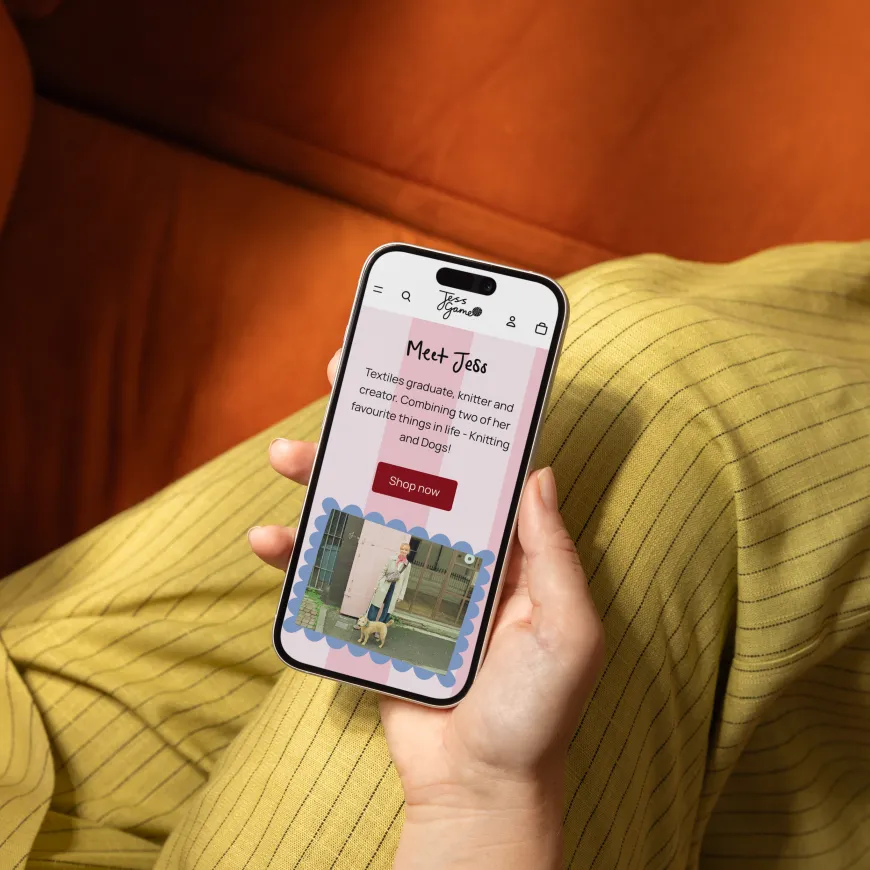
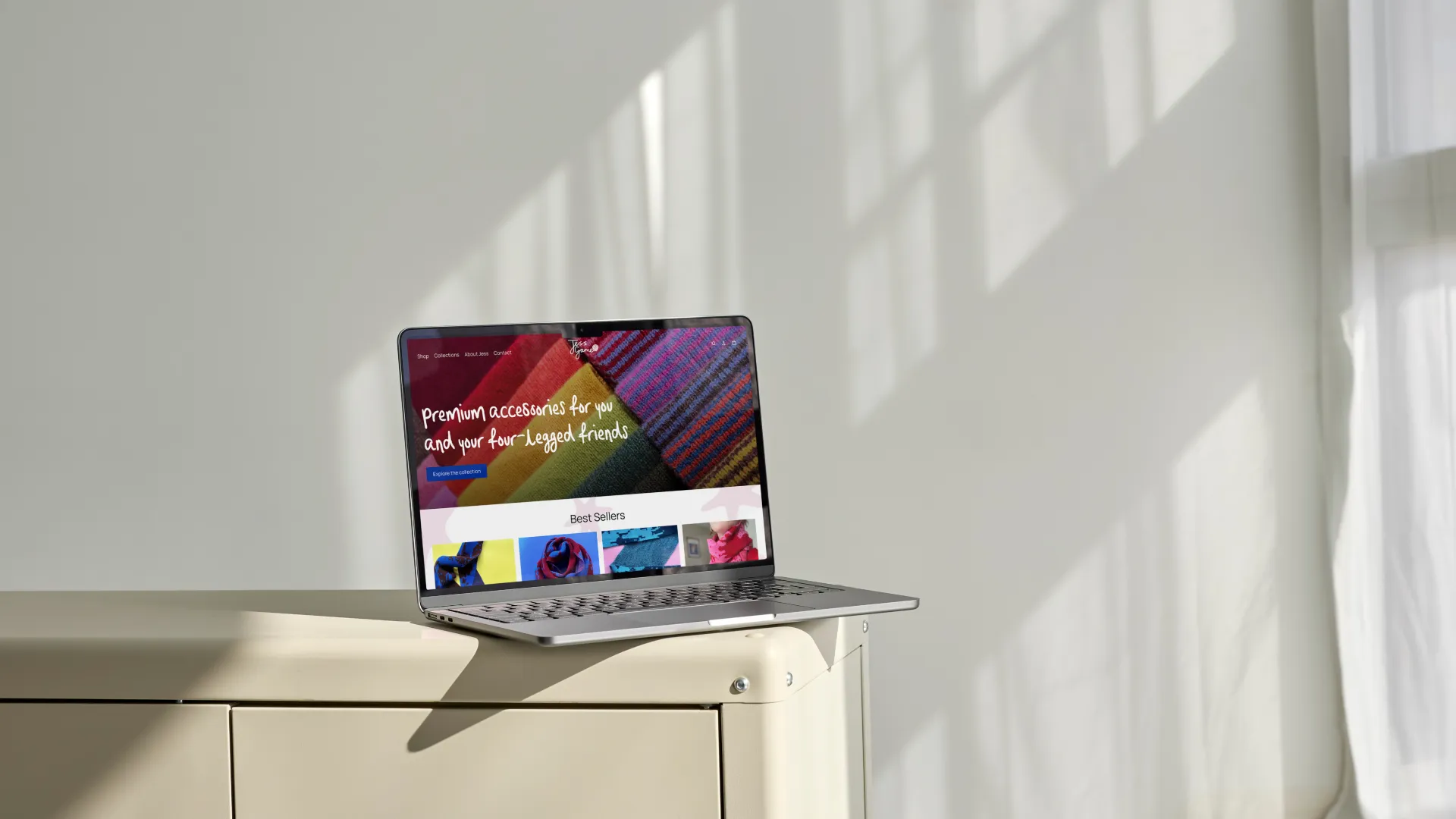
How Jess Game Knit took its market stall online
When we worked with Jess Game Knit, Jess already had customers through Etsy, independent shops and markets. She had a distinctive way of presenting her knitwear, right down to the signs she wrote for her stall. That lettering gave us a starting point for the website. We took Jess’s handwriting and turned it into Pippin Sans, a typeface she could use across the shop. We drew combinations of letters that join naturally, so a new collection name would still look as though Jess had written it herself. Someone who knew her stall could recognise her hand before they’d read a word.
We moved her products from Etsy and adapted an existing Shopify theme around her colours, photography and illustrations. The familiar parts of shopping online were already there. We could put the design time into the details that belonged to Jess. Following the move, Jess Game Knit saw a 55% increase in online sales over a 6 month period. For another maker considering Shopify, the part of Jess’s experience worth borrowing is where she started. Look at what people already recognise about your work. It might be your lettering, the glaze you mix yourself or the note you pack with every order. Give that detail a place in the shop.
How easy is it to move from Etsy to Shopify?
If you’ve spent years writing listings and photographing products, much of that work can come with you. Etsy lets you export active listings in a spreadsheet. Shopify’s migration app can use it to create draft products, including descriptions, prices and product imagery. That gives you a working catalogue to review before anything goes live. Start with a product you know inside out. Check that each colour shows the right photograph, each size has the right stock level and the delivery charge makes sense at checkout. Try ordering it on your phone. Once you’re happy with that journey, work through the rest of the range. Reviews and order history need separate handling. If you keep both shops open, decide how you’ll track stock across them, particularly if you sell one-off pieces.
The bigger question is how people will find you. Allow for Shopify’s subscription and payment fees, and for the time you’ll spend bringing customers to the site. You can keep Etsy open for discovery while you put your own web address on your market sign, share a collection with your social followers or invite visitors to sign up for the next release. That gives you a way to learn which customers come directly to you before you decide what role each shop should play.
A good place to start is with the question people ask most often when they pick up your work. What’s it made from? How long does it take? Could you make one in my size? Build a product page that answers it as well as you do in person. That’s a good reason for someone to buy from you, whatever tools you use.