
If you've spent any time talking to a web developer recently, there's a reasonable chance you've heard the word Laravel thrown around. Perhaps somebody has suggested building your next website with it, you've seen it halfway down a proposal, or you've sat politely through a conversation about frameworks, PHP and APIs while quietly wondering what the bloody hell any of it actually means. We talk about Laravel increasingly often at Think because it has become our preferred foundation for more ambitious websites and digital platforms, but unlike WordPress, Shopify or Squarespace, it isn't necessarily something a marketing director or business owner will have encountered before.
The simplest explanation is that Laravel is a framework for building bespoke web applications. You don't install it, choose a theme and start adding pages. Instead, it gives developers an established set of tools and a structured foundation for building the website or platform around what the organisation actually needs. That distinction is also the reason we increasingly prefer Laravel to WordPress for larger projects. With WordPress, you're generally starting with an existing content management system and adapting it. With Laravel, we're starting with the requirements and building the right system around them.
So What Actually Is Laravel?
I tend to think of Laravel and WordPress a little like two different ways of approaching a building project. WordPress is closer to starting with an established building. The foundations are already there, the basic structure makes sense and there is an enormous ecosystem of extensions available when you need another room or a different feature. You can renovate it, extend it and completely transform the way it looks, but you're still beginning with a structure designed to accommodate a very broad range of people.
Laravel is closer to having a really good construction system and being able to design the building around what it actually needs to do. It doesn't care whether the finished thing is a marketing website, member portal, comparison platform, customer dashboard or complicated booking system. It gives our development team established ways of handling databases, user accounts, permissions, APIs, background processes and the other logic underneath a modern digital platform, while giving us considerably more freedom over how those pieces fit together.
That freedom is the biggest reason we like it. Rather than beginning with a platform and asking, "How do we make this do what the business needs?", we can begin with the business and ask, "What should the system actually do?"

Why We Prefer Laravel
If we're approaching a new, ambitious digital project with a fairly blank sheet of paper, and the requirements and budget justify bespoke development, we would generally choose Laravel over WordPress.
A large part of that comes down to control. We control how the application is structured, how information moves around it, what gets loaded, how different types of users behave, how external systems connect and how new functionality is introduced later. We're not relying on several unrelated plugins to collectively behave like one bespoke platform, and we're not asking a general-purpose CMS to become something completely different from what it started as. That becomes especially valuable over time. Websites rarely stand still. Somebody eventually wants customer accounts, advanced search, a CRM integration, personalised content, a new service, a dashboard or some functionality nobody had thought about when the original site was commissioned. With Laravel, we can develop those additions within an architecture we understand and control, rather than continually adding another layer on top and hoping everything continues to play nicely together.
For us, it also creates a cleaner relationship between design and development. We're very particular about component systems, typography, interactions, accessibility and performance, and having greater control over the technical implementation means we're less likely to compromise those decisions because a theme or plugin expects something to work in a particular way. Laravel isn't valuable because it's more complicated. It's valuable because it gives us more freedom to make the complexity appropriate to the project.

And Where Does Statamic Come Into It?
One completely reasonable objection at this point would be that WordPress gives marketing teams a CMS straight out of the box, while Laravel doesn't. That's true, and it's why you'll often hear us talk about Laravel and Statamic together.
Statamic is a content management system built on Laravel. Laravel provides the foundation for the application and the more bespoke functionality underneath, while Statamic gives the people running the website somewhere straightforward to manage pages, imagery, articles, navigation and other content. What we particularly like is that we can shape that editing experience around the site we've actually designed. I don't think giving somebody complete control over every margin, font size and button treatment necessarily creates a better CMS. If you've invested in a carefully considered brand and website, the marketing team shouldn't have to become designers every time they create a page.
Instead, we can give them a flexible library of well-designed components where the typography, spacing, behaviour and responsive rules are already built in. They retain plenty of freedom over what they create without gradually turning the website into something completely different from the thing everybody originally signed off. The simplest way of thinking about it is that Laravel handles the application, Statamic handles the content and the design system joins everything together.
Where Laravel Really Pulls Ahead
The difference becomes particularly obvious when a website needs to interact with the rest of the business. Established organisations might have a CRM, payment provider, booking platform, property feed, membership database, marketing platform or any number of specialist systems behind the scenes, and there is enormous value in getting those systems talking to one another properly.
A form submission doesn't need to generate an email for somebody in the office to manually copy into Salesforce or another CRM. It could create or update the correct record automatically, trigger another process and associate everything with the customer's account. A logged-in user could see information coming from another platform, update it through the website and have those changes reflected elsewhere behind the scenes. Laravel is particularly well suited to that sort of API integration and bespoke application development because the databases, workflows, user permissions and connections can be treated as fundamental parts of the platform from the beginning.
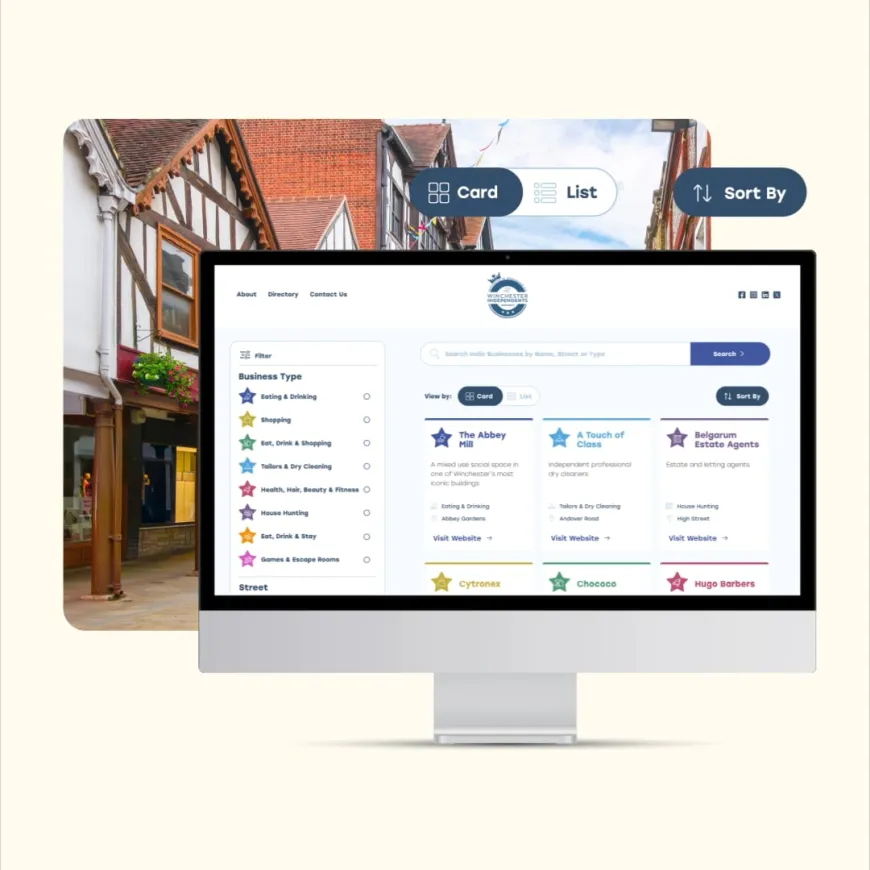
We've seen that across our own work. Propp combines a public-facing website with comparison functionality, APIs and user tools. English Naturally connects its website with host-family applications, accounts and Maximizer CRM. Brain Tumour Hub needed advanced search, saved information and more sophisticated relationships between content than simply presenting a collection of pages. They're websites, but they're also helping deliver the organisations' actual services. That's the point where Laravel starts becoming much more interesting to us.


What About Performance And Security?
These are also areas where we prefer the level of control Laravel gives us, although I don't think it's useful to claim that every Laravel website is automatically fast and every WordPress website is automatically slow. You can build either platform badly, and performance still depends on the quality of the development, hosting, imagery, scripts, databases and countless other decisions.
The difference is that with Laravel we're able to be extremely deliberate about what the application needs to do. We can control what gets loaded, what gets cached, how database queries are handled and which processes can happen in the background. We're building around the requirements rather than necessarily loading functionality designed to accommodate thousands of other possible use cases.
Security is similar. Laravel gives us robust tools for authentication, permissions and controlling how different parts of an application behave, but no framework makes security automatic. WordPress can be run very securely when it is properly developed and maintained. One of the challenges with WordPress, however, is that websites can become dependent on a large number of third-party themes and plugins, each of which introduces another piece of software that needs maintaining and another potential point of vulnerability if it is neglected. Again, what we value about Laravel is control and visibility over what we've actually built.
Does That Mean We Don't Like WordPress?
Not remotely. We still think WordPress has an incredibly important place, which is exactly why we created Upkeep. There are millions of businesses that simply do not need a bespoke Laravel application. They need an excellent website that communicates what they do, looks professional, generates enquiries, gives the marketing team control over their content and doesn't cost them a fortune every time something needs changing.
WordPress is extremely good at that, and its enormous plugin ecosystem can be a genuine commercial advantage. If somebody has already spent years developing a reliable solution to the exact problem you need solving, paying us to rebuild the same functionality from scratch in Laravel would be difficult to justify. That's where Upkeep fits. It gives WordPress design, development, hosting, maintenance and support a dedicated home within our wider offering. We can build new WordPress websites, improve existing ones, support sites built by other agencies and help organisations get more from the platform they already have.
So the distinction isn't really good technology versus bad technology. It's different technology for different jobs. For relatively straightforward marketing websites and organisations where budget, speed and access to established functionality are particularly important, WordPress can be absolutely brilliant. For Think's more ambitious digital work, particularly where bespoke functionality, integrations, accounts or long-term platform development are involved, we generally prefer Laravel.
So, What The Bloody Hell Is Laravel?
Laravel is a powerful foundation for building bespoke websites, custom web applications and digital platforms around the organisation they're intended to serve. It gives us significantly more control over functionality, architecture, integrations and future development than we'd generally have when adapting a platform such as WordPress, while pairing it with Statamic still gives marketing teams a really straightforward way to manage their content.
And that's ultimately why we prefer it at Think. For the kind of ambitious digital projects we increasingly work on, it gives our designers and developers more freedom to solve the actual problem rather than working backwards from what an existing platform expects us to do.
WordPress isn't going anywhere, and through Upkeep we're probably doing more dedicated WordPress work than ever. But the two now have much clearer jobs within our business. Upkeep gives organisations a brilliant route into WordPress. Think uses Laravel and Statamic when the ambition, functionality and complexity call for something more bespoke.
Most clients don't particularly care whether their website is powered by PHP, Laravel, WordPress or anything else, and nor should they. They care whether it works, whether it's easy to manage and whether it can do what their organisation needs it to do. For us, Laravel simply gives us more freedom to make the answer to that last question yes.